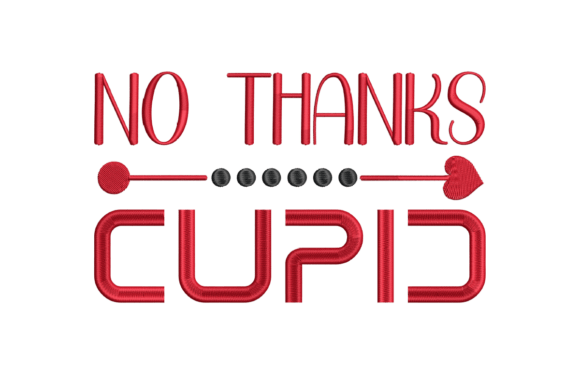
No Thanks Cupid: A Designer's Review for Business Merch
As an experienced embroidery designer who has spent years crafting digital assets for everything from high-end fashion to local coffee shops, I know that selecting the right design is about more than just aesthetics. It is a strategic decision that impacts production costs, brand perception, and customer loyalty. When evaluating No Thanks Cupid, a machine embroidery design specifically tailored for creative Valentine's Day projects, my primary focus shifts immediately to its viability for small business merchandise and branded patch use.
The title alone suggests a playful, slightly rebellious tone that could resonate well with modern brands looking to break away from traditional romantic clichés. This review will dissect how No Thanks Cupid performs in real-world commercial applications, offering practical insights for embroidery shop owners, Etsy sellers, and product designers who need reliable design assets.
First Impressions and Brand Personality
When I first encountered the description of No Thanks Cupid, it struck me as a design with distinct character. In the crowded marketplace of holiday-themed apparel, standing out requires a specific visual personality. The name implies a sense of humor and independence, which translates beautifully into a brand identity that feels authentic rather than mass-produced.
For a boutique or a handmade shop, this design offers a unique opportunity to engage customers who might be tired of generic hearts and roses. It positions the brand as trendy, approachable, and confident. Whether you are creating custom apparel for a creative studio or designing a tote bag design for a florist, No Thanks Cupid provides a conversation starter. It moves beyond simple decoration to become a statement piece that aligns with a "handmade" ethos, suggesting that the business owner values individuality over conformity.
Real-World Applications for Small Business Merch
The true test of any embroidery file is its versatility across different products. Based on the nature of No Thanks Cupid, here is how I see it performing in various commercial scenarios:
- Embroidered Patches: This design has strong potential as a standalone embroidered patch. Small businesses often use patches to create collectible items or to add a premium feel to jackets and bags. If the stitch density is manageable, No Thanks Cupid can serve as a flagship asset for a Valentine's Day limited edition drop.
- Staff Uniforms and Aprons: For a café or bakery, adding a subtle apron embroidery detail can boost team morale and brand recognition. A playful No Thanks Cupid on a barista's apron adds a touch of personality without being overwhelming. It signals a friendly atmosphere to customers walking in.
- Cap Embroidery: Caps are a staple of promotional merch. The design could work well on the front panel or the side of a cap, serving as a unique accent for staff uniforms or event giveaways.
- Tote Bag Design: Tote bags are essential for crafters and Etsy sellers. A tote bag design featuring this motif can turn a simple canvas bag into a marketing tool that customers proudly carry around town.
- Product Packaging Accents: Imagine sewing a small version of this design onto the tag of a handmade product or as a label on a gift box. These details elevate the perceived value of the finished product and show attention to detail.
By integrating No Thanks Cupid into these areas, businesses can create a cohesive visual language that reinforces their brand identity across multiple touchpoints.
Strategic Considerations and Limitations
While the concept is promising, a professional designer must always approach production with caution. Not every design works perfectly on every surface. Here are critical areas where No Thanks Cupid requires careful evaluation before mass production:
Small Patch Sizes: If you plan to produce tiny patches, intricate details within the design may get lost. You must ensure that the stitch density allows for clear definition even at smaller scales. If the outlines are too thin, they may not hold up after washing.
Curved Surfaces: Embroidering on the front of a cap involves significant curvature. Designs with straight lines or large blocks of text can distort if not digitized correctly. You need to verify how the design handles tension on curved fabric.
Fabric Texture and Color: Dark uniforms require high contrast. If No Thanks Cupid relies on fine details in light colors, it might disappear against dark backgrounds. Similarly, textured fabrics like heavy denim or fleece can make the design look uneven if the stabilizer isn't chosen correctly.
Wash Durability: Items that undergo frequent washing, such as work shirts or aprons, need robust stitching. Detailed outlines can snag or unravel if the underlay isn't sufficient. Always test the durability of the embroidered patch or logo before committing to a full order.
Impact on Brand Identity and Customer Trust
In the world of commerce, visual consistency is key to building trust. Customers associate high-quality embroidery with reliability and professionalism. Using a well-executed digital embroidery file like No Thanks Cupid signals that your business cares about quality.
When a customer sees a crisp, clean design on a tote bag or a uniform, it enhances the perceived value of the entire brand. It transforms a generic item into a premium handmade product. Furthermore, a design with a unique personality helps with buyer engagement. People are more likely to share photos of unique merchandise on social media, providing free marketing for your small business.
However, if the design is poorly executed—looking sloppy or distorted—it can damage brand identity instantly. Therefore, the choice of design is directly linked to customer retention and long-term success.
Practical Designer Notes for Production
Before you run No Thanks Cupid on your production line, follow these essential steps to ensure a successful outcome:
- Test in Black and White: Convert the design to grayscale first. This helps you visualize the stitch density and spacing without the distraction of color. It reveals if the design holds its shape when simplified.
- Check Stitch Density: Ensure the design is not too dense for the intended fabric. High density can cause puckering, especially on lightweight materials.
- Review Thread Colors: Select thread colors that offer maximum contrast. If the design uses multiple shades, ensure they complement each other and do not muddy together during the stitching process.
- Inspect Spacing: Verify that there is enough negative space around the design elements. Crowded designs often fail on small patches or caps.
- Confirm Hoop Size: Make sure the design fits within the standard hoop sizes available in your shop. If the design exceeds your equipment's capabilities, you may need to re-digitize it.
- Test on Real Fabric: Never rely solely on digital mockups. Stitch the design on the actual fabric you intend to use. Different materials react differently to needle penetration and thread tension.
- Use Proper Stabilizer: The choice of stabilizer is crucial for maintaining the integrity of the design. Use cut-away stabilizers for stretchy fabrics and tear-away for stable wovens.
- Create a Printable Mockup: Before producing physical samples, generate a printable mockup to present to clients or for internal approval. This saves time and resources.
- Verify Commercial Licensing: Most importantly, confirm that you have the proper commercial embroidery license to sell products featuring No Thanks Cupid. Check the terms provided by the file creator to avoid legal issues.
If the file formats and specific technical details (such as exact stitch count or recommended hoop size) are not explicitly listed in the product description, you must contact the provider or perform your own testing to gather this data. Do not assume compatibility.
Conclusion
No Thanks Cupid represents a versatile opportunity for small business owners and designers looking to add a unique flair to their Valentine's Day collections. With the right execution, it can enhance brand identity, improve customer engagement, and elevate the quality of your merchandise. By following professional testing protocols and understanding the limitations of the design, you can successfully integrate this asset into your commercial embroidery projects.
Whether you are creating custom apparel, branded patches, or unique gifts, taking the time to evaluate the design thoroughly ensures that your final product meets the high standards your customers expect. Treat every stitch as an investment in your brand's reputation.